
Advancing our scientific understanding of Mars: from its geological history to the search for life
EXODOCS pushes the frontiers of Mars exploration by combining cutting-edge instrumentation, advanced data analysis, and innovative methodologies to search for traces of life and to better understand the planet’s history. The project brings together expertise in atmospheric science, surface and subsurface investigations, and mission operations, training 16 Doctoral Candidates to tackle the most pressing scientific questions about Mars. EXODOCS research is paving the way for future missions — and for answering one of humanity’s greatest questions: are we alone?
WP3
Enhance the understanding of the Martian surface
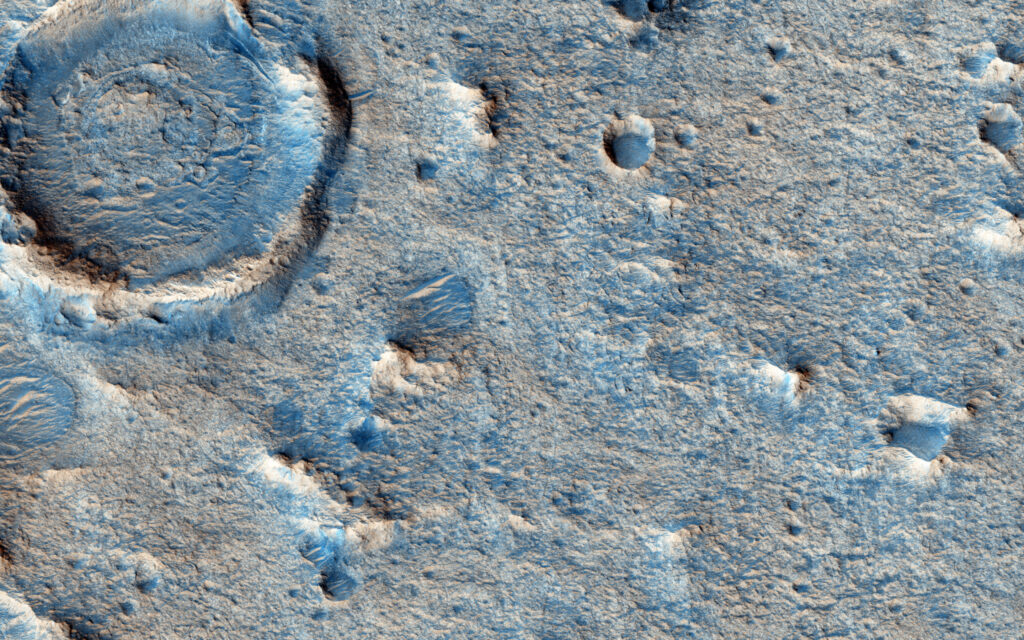
The main objective of WP3 is to advance the scientific understanding of Martian surface processes, mineralogy, and environmental conditions by leveraging data from past, current, and future Mars missions. The WP will develop innovative methodologies for interpreting mineralogical and environmental data, refine automated systems for detecting features of astrobiological interest, and improve models of surface alteration processes.
List of available PhD positions:
- Context: Close-up imaging plays a crucial role in Mars exploration by providing detailed data on Martian rock, soil, and regolith. These high-resolution images allow scientists to analyse the structure, texture, mineralogy, and elemental or organic composition of the Martian surface, which is essential for understanding its geological and potential biological history.
- Scientific challenges: Close-up images from past and current rover missions have been subjected to technical limitations, including distortion, stray light, and colour response issues, which have hindered their scientific return. These problems reduce the accuracy of critical scientific measurements, affecting the interpretation of geological features and potential biosignatures.
- Research objectives:
- develop novel calibration techniques that allow automatically detection and correction of technical issues in close-up images;
- develop methods for cross-interpreting images collected by ExoMars survey instruments (CLUPI, PanCam and Enfys);
- ensure proper integration into the existing processing pipelines.
- Impact:
- Deliver novel calibration data for close-up cameras (Enhance the scientific return of CLUPI and other imaging tools);
- Apply calibration pipeline to multiple missions (Improve close-up imaging data quality for past and future missions);
- Develop methods for cooperative science (Facilitate integration among survey instruments to maximize mission scientific outcomes.
- Hiring institution: Technical University of Munich (Germany)
- ExoMars instrument team: CLUPI
- Supervisor: Detlef Koschny ()
- Co-supervisor: Frédéric Foucher ()
- Link to the EURAXESS call: Pending
- Context: Panoramic imaging of Martian clasts and regolith is key to understanding Mars’ geology and environment. The size, shape, and distribution of clasts reveal rock lithology, while erosion and transport features indicate environmental processes. Regolith properties (e.g., grain size, color) help reconstruct Mars’ geological and climatic history. Regular, high-resolution panoramic imaging is critical for tracking how these features vary across different terrains.
- Scientific challenges: Procedures for the automated identification and analysis of clasts and regolith remain underdeveloped. Additionally, panoramic images are rarely integrated with data from other survey instruments (e.g., close-up cameras, NIR imagers), limiting cross-instrumental insights.
- Research objectives:
- Develop tools for automated detection and classification of clasts, boulders, and regolith in Mars panoramic images;
- Test protocols for cooperative analysis using ERF survey instruments (PanCam, CLUPI, Enfys);
- Benchmark this cooperative approach against previous missions’ panoramic camera outputs.
- Impact:
- Implement AI methods for panoramic image analysis (Automate the detection and classification of Martian clasts and regolith for enhanced geological insights);
- Promote cooperative science among ERF instruments (Integrate PanCam data with CLUPI and Enfys, maximizing cross-instrumental analysis and understanding);
- Optimize decision-making for rover missions (Refine tactical and strategic planning processes, improving mission efficiency and scientific outcomes).
- Hiring institution: The Open University (United Kingdom)
- ExoMars instrument team: PANCAM
- Supervisor: Matthew Balme ()
- Co-supervisor: Daniela Tirsch ()
- Link to the EURAXESS call: https://euraxess.ec.europa.eu/jobs/435692
- Context: Previous Mars missions, such as Curiosity and Perseverance, have successfully utilized infrared (IR) imaging to capture data on the Martian surface, providing critical insights into its mineralogy and geochemistry. The Enfys instrument onboard RF will identify features of interest (FOIs) across varied terrains, to be approached for closer, more detailed analysis. By focusing on IR imaging at multiple spatial scales, Enfys aims to streamline the selection of key FOIs, a crucial step for maximizing mission efficiency and scientific yield.
- Scientific challenges: Despite the utility of IR data in previous missions, fully automated systems for mineral identification from panoramic IR images, particularly across different spatial scales, are not yet developed. Furthermore, integrating panoramic IR data with outputs from other proximity-based instruments has been limited. This gap in cross-instrumental data analysis hinders the ability to identify FOIs promptly and accurately, reducing the mission’s overall scientific return. To overcome these challenges, this project aims to address specific.
- Research objectives:
- Develop tools for automated FOI identification at stand-off distances;
- Compare Enfys mineral identification capabilities with similar instruments on previous missions;
- Integrate Enfys data with outputs from ERF’s complementary spectrometers.
- Impact:
- Develop automated tools for Enfys for mineral identification across scales (improve precision and efficiency in mineral analysis);
- Integrate IR images with spectroscopic data for comprehensive mineral analysis (enhance data consistency and depth in mineral detection);
- Provide a comparative analysis of IR imager outputs from Mars rovers, generating validated methodologies for future missions (optimize imaging techniques and support more accurate Mars exploration).
- Hiring institution: Mullard Space Science Lab., University College London (United Kingdom)
- ExoMars instrument team: ENFYS
- Supervisor: Andrew Coates ()
- Co-supervisor: Claire Cousins ()
- Link to the EURAXESS call: https://euraxess.ec.europa.eu/jobs/434130
- Context: Efficient exploration of the Martian surface requires accurate target prediction across multiple spatial scales. By integrating orbital and ground-based observations, scientists can optimize rover paths and increase scientific yield. Instruments like the High-Resolution Stereo Camera (HRSC) on MEX and CaSSIS on TGO capture large-scale maps, while HiRISE provides higher-resolution images.
- Scientific challenges: Current target identification relies on manual interpretation, which is slow and limited in dynamically predicting targets across scales. Integration of orbital and ground data has been minimal, limiting multi-scale target prediction’s effectiveness. AI-based, multi-scale prediction could greatly enhance target identification and improve rover mission planning. This project aims to develop an AI-driven multi-scale target prediction system integrating orbital and ground-based data.
- Research objectives:
- Develop AI models to identify potential targets using orbital data and refine predictions with high resolution images;
- Create a workflow that integrates multi-scale data to prioritize targets;
- Validate prediction models through case studies applicable to current and future missions.
- Impact:
- Develop a multi-scale target prediction system integrating orbital and ground-based data (improve targeting accuracy and optimize rover navigation strategies);
- Facilitate integration of ground-based data with orbital observations to refine global mineralogical maps of Mars (lead to a more accurate understanding of Mars’ surface composition and geological history).
- Hiring institution: German Aerospace Center (Germany)
- ExoMars instrument team: ENFYS
- Supervisor: Katharina Otto ()
- Co-supervisor: Helen Miles ()
- Link to the EURAXESS call: Pending
- Context: Ground-penetrating radars (GPRs) like RIMFAX on Mars 2020 and RoPeR on Tianwen-1 have proven effective for identifying subsurface features on Mars. The ERF mission’s GPR, Wisdom, brings unique enhancements, such as a larger antenna-ground gap, allowing data collection on surface roughness and scattering. Additionally, Wisdom’s dual-polarimetric, rotated antenna design enables precise quantification of surface roughness and localized detection of scattering objects.
- Scientific challenges: Despite these potential advantages, advanced models to optimize the scientific exploitation of GPRs (including Wisdom) still need to be developed.
- Research objectives:
- Conduct a detailed analysis of spectral patterns across all polarizations;
- Model the radar channel, including instrument, rover, and geological interactions;
- Quantify surface roughness and scattering properties; and
- Compare Wisdom’s scientific output with previous Mars radar instruments.
- Impact:
- Develop a database of surface permittivity measurements across spatial and temporal domains (improve the understanding of Martian surface properties);
- Cross-correlate permittivity data with other instrument surface data (enhance the integration and interpretation of multi-instrument datasets);
- Provide a comparative analysis of Wisdom and similar instruments from past missions (assess radar technology’s strengths and limitations, guiding future Mars missions);
- Hiring institution: University of Versailles Saint-Quentin-en-Yvelines (France)
- ExoMars instrument team: WISDOM
- Supervisor: Valerie Ciarletti ()
- Co-supervisor: Alessandro Frigeri ()
- Link to the EURAXESS call: Pending
WP4
Explore Mars beneath the surface
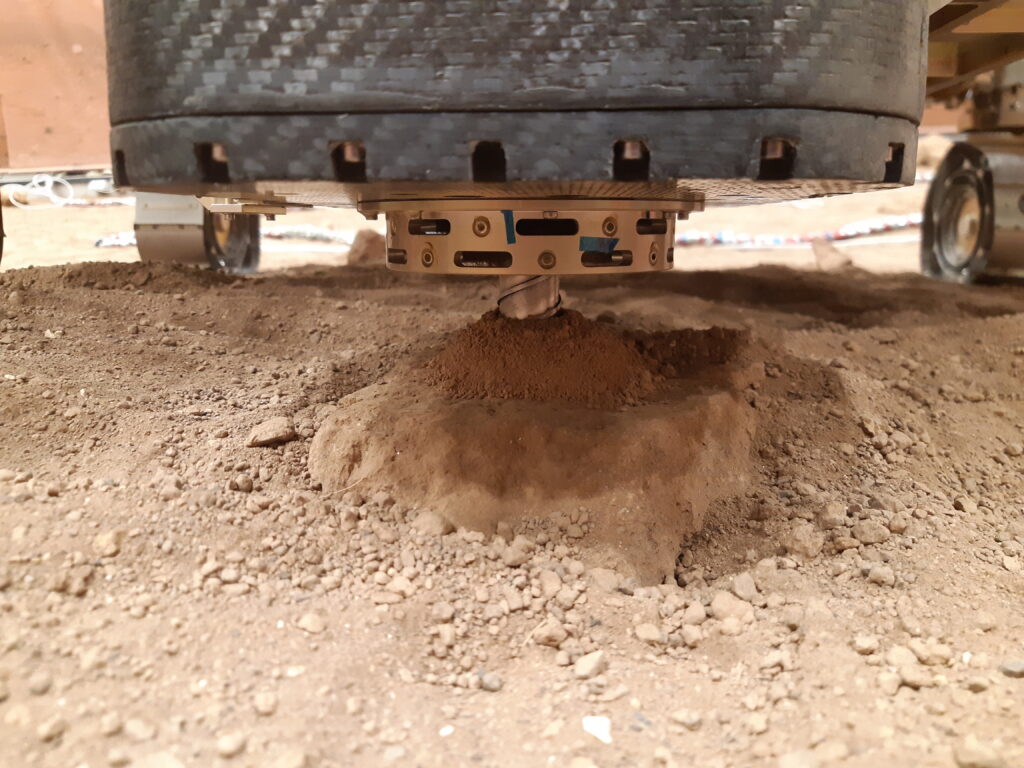
WP4 focuses on advancing our knowledge of the Martian subsurface by exploiting the unique drilling capability of the Rosalind Franklin rover, which can reach depths of up to 2 meters. This Work Package develops innovative methods to interpret spectroscopic, radar, and geochemical data, while assessing how drilling affects mineralogical integrity.
List of available PhD positions:
- Context: Raman spectroscopy is essential for detecting and characterizing minerals and their hydration states, making it a key tool for planetary missions targeting Martian (sub)surface exploration. Its ability to link mineralogy with biosignature preservation has led to its inclusion in Mars 2020 (SuperCam and SHERLOC) and ExoMars (RLS) missions, as well as the development of prototypes for future missions like PANGAEA (INTA) and DISCO (IMS). These instruments are often used in cooperation with complementary techniques, such as LIBS (SuperCam), X-ray fluorescence (XRF, PIXL), and NIR (MicrOmega), to provide a comprehensive view of Martian mineralogy at the micrometer scale.
- Scientific challenges: Despite the varying configurations of Raman instruments significantly influencing their analytical capabilities, a comprehensive comparison of their outcomes and cooperative use with complementary techniques remains unexplored.
- Research objectives:
- Compare Raman spectrometers and prototypes from past, present, and future missions using terrestrial analogues;
- Evaluate the benefits of cooperative analyses with complementary techniques on current and future missions;
- Develop and validate protocols integrating RLS with complementary ERF spectrometers for enhanced qualitative analysis of complex mineral mixtures.
- Impact:
- Comprehensive comparison of Raman spectrometers from past, present, and future missions (Optimizes instrument configurations for planetary exploration);
- Validated protocols for integrating RLS with complementary techniques (Enhances mineralogical analysis for ExoMars and future missions).
- Demonstrated benefits of cooperative analyses (Refines workflows for robust mineral characterization and biosignature detection).
- Hiring institution: Universidad de Valladolid (Spain)
- ExoMars instrument team: RLS
- Supervisor: Marco Veneranda ()
- Co-supervisor: Olga Prieto Ballesteros ()
- Link to the EURAXESS call: https://euraxess.ec.europa.eu/jobs/432847
- Context: Detecting hydrated minerals is key to astrobiology, as these minerals indicate past water activity and potential habitability on Mars. Previous missions using multispectral cameras (e.g., MastCam and MastCam-Z) have successfully identified hydrated minerals in surface rocks. The ERF’s survey instruments will enable monitoring of drill tailings, providing a unique chance to observe dehydration and hydration reactions in subsurface materials exposed to Martian surface conditions.
- Scientific challenges: Although potential alteration processes could compromise the optimal mineralogical interpretation of drill tailings, very little is known about the capability of Enfys to detect the kinetics of mineral reactions under Martian conditions.
- Research objectives:
- Simulate mineral alteration kinetics under Mars-like conditions in a laboratory setting;
- Use grain-size monitoring as a proxy for hydration reactions, correlating particle size changes with hydration/dehydration progress; and
- Explore synergies between Enfys and other ERF survey instruments to improve hydration signal monitoring.
- Impact:
- Develop a framework for monitoring (de)hydration reactions in Martian drill tailings using VNIR spectroscopy (improve analysis of subsurface mineral reactions on Mars);
- Provide insights into the behavior of Martian minerals (deepen understanding of Mars environmental evolution);
- Implement protocols during the RF mission, establishing best practices for integrating survey instruments (enhance scientific return from drilling and set standards for future missions).
- Hiring institution: Mullard Space Science Lab., University College London (United Kingdom)
- ExoMars instrument team: PANCAM
- Supervisor: Louisa Preston ()
- Co-supervisor: Peter Grindrod ()
- Link to the EURAXESS call: https://euraxess.ec.europa.eu/jobs/434461
- Context: Accurately determining the composition of Martian subsurface materials is essential for evaluating Mars’ geological history and habitability potential. Although the ExoMars Rosalind Franklin rover’s drill cores are protected from direct environmental exposure, they may still experience alteration due to frictional heating during drilling and subsequent crushing processes, potentially affecting scientific analysis.
- Scientific challenges: By comparing spectroscopic data from Ma_Miss (at the drill tip) with those collected on crushed samples by MicrOmega and RLS, researchers can assess alteration effects from sample handling and develop strategies to reduce impact. However, these collaborative practices have yet to be systematically tested.
- Research objectives:
- Identify potential mineral dehydration and structural changes during drilling and crushing;
- Develop a protocol for detecting dehydration and sample alteration;
- Integrate datasets from ERF spectrometers to improve subsurface geological interpretations.
- Impact:
- Develop automated protocols for cross-comparison of complementary spectroscopic data (improve accuracy in detecting sample alterations);
- Enhance the scientific return of the ExoMars mission, serving as a reference for future drilling missions (maximize insights gained from in-situ analysis);
- Provide a holistic understanding of stability and alteration dynamics of Martian subsurface materials (deepen knowledge of Martian subsurface conditions and processes).
- Hiring institution: The candidate will be hired by the Sapienza University of Rome (LSU, Italy), while the Istituto Nazionale di Astrofisica (INAF-Rome) will act as the hosting institute.
- ExoMars instrument team: Ma_Miss
- Supervisor: Francesca Altieri ()
- Co-supervisor: Maria-Paz Zorzano Mier ()
- Link to the EURAXESS call: https://euraxess.ec.europa.eu/jobs/435272
- Context: Close-up imagers like the MAHLI and WATSON instruments on Curiosity and Perseverance have been critical for studying outcrops, abraded rock surfaces, and associated tailings, revealing fine-scale geological features such as mineral grains, textures, and sedimentary structures. The CLUPI instrument on the ERF will take this further by investigating drill cores and tailings from depths of up to 2 meters, providing high-resolution images of subsurface materials and monitoring their evolution over time.
- Scientific challenges: the number of laboratory experiments simulating these science activities is very limited.
- Research objectives:
- Compare surface-outcrop and core-sample images to create a reference dataset linking textures and sedimentary structures observed in surface outcrops to those in centimeter-sized core samples;
- Optimize imaging configurations (e.g., distance, brightness, orientation) for photographing drill cores and tailings to enhance the quality of Mars data;
- Develop image processing and classification methods to identify and classify rock textures and sedimentary structures in drill cores.).
- Impact:
- Maximize the scientific value of ERF close-up images (Enhance analysis of drill tailings and cores for Martian subsurface exploration);
- Integrate CLUPI data with other survey instruments (Provide a comprehensive understanding of subsurface materials and improve mission efficiency);
- Deliver methodologies for future missions (Establish best practices to refine planetary exploration mission planning).
- Hiring institution: Space Exploration Institute
- Link to the EURAXESS call: Pending
- Context: Spectroscopic techniques like Raman and NIR have been instrumental in recent Mars missions for mineralogy, with instruments such as SuperCam and SHERLOC on Mars 2020 advancing our understanding by identifying diverse minerals and potential biosignatures. The ERF mission will enhance this approach by enabling cooperative analysis between RLS and MicrOmega. Unlike previous instruments, RLS and MicrOmega are designed to generate extensive datasets that may allow mineral abundance estimation.
- Scientific challenges: Although the quantification capability of RLS has been partly assessed, the potential for MicrOmega to provide quantitative data remains largely untested.
- Research objectives:
- Develop quantification methods for estimating mineral abundances from NIR images collected by MicrOmega;
- Evaluate the complementarity of NIR-derived estimates with RLS and MOMA results;
- Determine how semi-quantitative analysis enhances the scientific value of spectroscopic data over traditional qualitative methods.
- Impact:
- Develop advanced methodologies for estimating mineral abundance via NIR spectroscopy (improve precision in identifying key Martian minerals);
- Enhance MicrOmega- RLS- MOMA coordinated science capabilities (increase data quality and reliability in ERF mission results);
- Establish benchmarks demonstrating the advantages of semi-quantitative over qualitative spectroscopic analysis (set new standards for mineralogical studies in future Mars missions).
- Hiring institution: Université Paris-Saclay (France)
- ExoMars instrument team: MicrOmega
- Supervisor: Cedric Pilorget ()
- Co-supervisor: Mathieu Vincendon ()
- Link to the EURAXESS call: https://euraxess.ec.europa.eu/jobs/434078
- Context: Selecting optimal drilling sites on Mars relies on GPR data, which provides crucial insights into geological context and possible water or ice presence. Compared to past GPR instruments like RIMFAX (Perseverance) and RoPer (Zhurong), Wisdom offers the highest-resolution imaging of the shallow subsurface (up to 3 meters). Its dual polarimetric mode further enables it to characterize subsurface features (e.g., boulders, voids, layers) by providing additional data on shape, orientation, and dielectric properties.
- Scientific challenges: Despite the importance of GPR data, interpreting Wisdom’s polarimetric data requires a systematic approach that has yet to be fully developed.
- Research objectives:
- Create and evaluate GPR simulations for targets of varying shapes, orientations, sizes, and permittivity to establish a radargram signature library;
- Validate simulations through lab and Mars-analog field tests;
- Compare Wisdom’s scientific output with previous mission GPRs;
- Integrate GPR data with complementary analytical instruments.
- Impact:
- Create a comprehensive polarimetric radargram library (improve subsurface feature interpretation by Wisdom);
- Optimize drilling location selection to enhance the scientific return of the ERF rover (maximize mission efficiency and insights);
- Develop data analysis workflows for GPR (standardize and elevate GPR practices in planetary exploration).
- Hiring institution: Technische Universität Dresden (Germany)
- Link to the EURAXESS call: Pending
- ExoMars instrument team: WISDOM
- Supervisor: Dirk Plettemeier ()
- Co-supervisor: Valerie Ciarletti ()
WP5
Recognize evidence of life
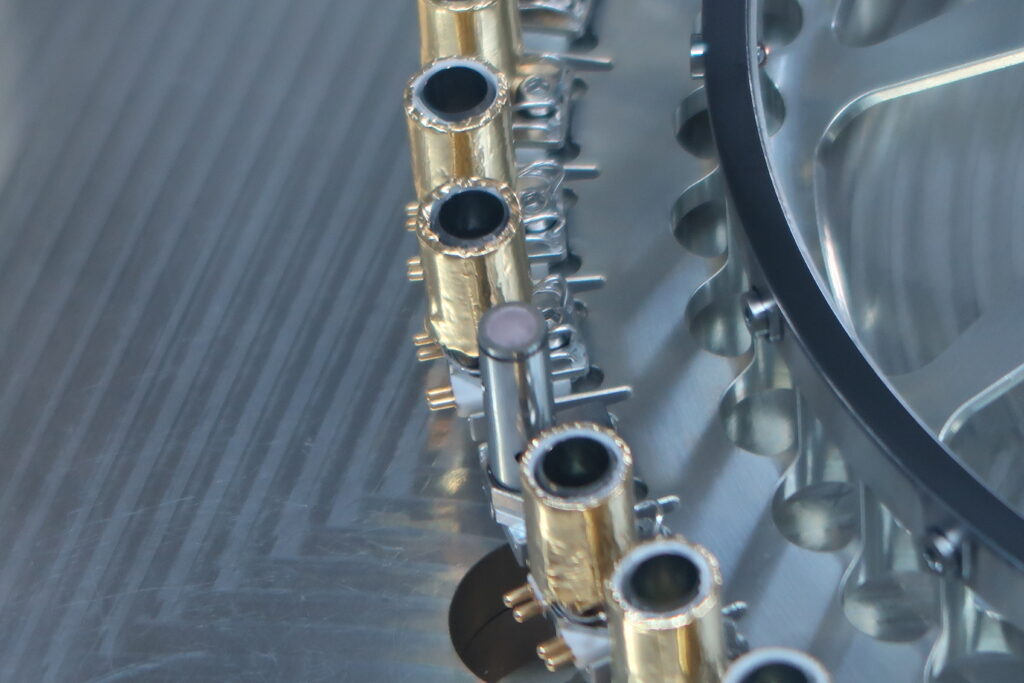
WP5 aims to develop and implement innovative methodologies to identify and discriminate potential biosignatures on Mars. Given the harsh Martian environment, where chemical and morphological biosignatures are often altered, this WP focuses on refining the detection capabilities of Rosalind Franklin rover instruments. By optimizing analytical procedures, advancing multi-analytical models, and investigating organic–mineral interactions, WP5 seeks to provide unambiguous evidence of past or present life.
List of available PhD positions:
- Context: GC-MS has been essential in Mars astrobiology missions, such as Viking and Curiosity, for detecting organic molecules. While highly effective, past missions analyzed only surface materials, where harsh Martian conditions likely degrade organic biosignatures. The MOMA instrument on the RF rover is the first to access subsurface samples, where organic molecules may be better preserved, improving detection prospects.
- Scientific challenges: MOMA allows flexible extraction of organics from Martian samples, but a detailed assessment of how different preparation methods affect GC-MS results remains partially unaddressed.
- Research objectives:
- Develop a database of organic compounds and their pyrolysis behavior under MOMA-like conditions;
- Evaluate how different sample preparations impact the detection and identification of organics; and
- Refine GC-MS parameters to optimize sensitivity and accuracy.
- Impact:
- Build a comprehensive GC-MS reference signal library (this will improve identification of organic molecules on the RF mission);
- Enhance RF rover capability to detect organics in Martian subsurface samples (enhance life detection capability of the RF mission);
- Provide novel insights on GC-MS for future astrobiology missions (advance organic detection techniques in planetary exploration. as the DraMS instrument onboard the Dragonfly mission to Titan).
- Hiring institution: The candidate will be hired by University of Versailles Saint-Quentin-en-Yvelines (UVSQ, France) but the PhD degree will be awarded by the University Paris-Saclay (UPS, France).
- ExoMars instrument team: MOMA
- Supervisor: Cyril Szopa ()
- Co-supervisor: Caroline Freissinet ()
- Link to the EURAXESS call: Pending
- Context: Pyrolysis has been crucial in astrobiology missions like Viking and Curiosity, heating samples to release organics for analysis. Recent studies suggest it can also help differentiate biominerals (formed by biological processes) from abiotic minerals due to unique physic-chemical properties that can induce distinct thermal decomposition behavior during pyrolysis.
- Scientific challenges: Although this method could be vital for detecting biosignatures, detailed pyrolytic characterization of biominerals has never been attempted by pyrolytic units for astrobiology purposes.
- Research objectives:
- Analyze biotic and abiotic minerals using pyrolysis techniques, including DTA-GC-MS and RE-GC-MS;
- Examine organic matter entrapment and release from mineral structures;
- Develop a statistical approach to optimize biomineral discrimination; and
- Evaluate the role of complementary spectroscopic techniques in identifying abiotic minerals
- Impact:
- Create a database of thermal degradation and organic release for biominerals and abiotic organo-minerals (provide new routes to distinguish biosignatures on Mars);
- Enhance MOMA’s capabilities for life detection and coordinated operations with RLS and MicrOmega (improve decision-making and efficiency during RF operations);
- Provide methodologies to advance pyrolytic instruments in future astrobiology missions (strengthen scientific outcomes in future planetary exploration missions).
- Hiring institution: Université Paris Cité (France)
- ExoMars instrument team: MOMA
- Supervisor: Fabien Stalport ()
- Co-supervisor: William B. Brinckerhoff ()
- Link to the EURAXESS call: https://euraxess.ec.europa.eu/jobs/421686
- Context: The detection of organic biosignatures on Mars is closely tied to the mineral composition of samples, with phyllosilicates being key due to their ability to adsorb and protect organics from UV radiation. Formed through prolonged water-rock interactions, phyllosilicates suggest past habitable conditions, making these regions priority targets for astrobiology missions.
- Scientific challenges: Despite heavy reliance on spectroscopic instruments, few studies have assessed their capacity to detect trace organics within complex Martian-like mineral mixtures. Additionally, the impact of UV-induced alteration on organic signatures and differentiation between biosignatures and abiotic molecules remains poorly understood.
- Research objectives:
- Define spectrometer detection limits for trace organics in complex mineral matrices;
- Examine phyllosilicates’ role in preserving organics under harsh conditions; and
- Develop cooperative-science protocols to reliably differentiate altered biosignatures from abiotic signals.
- Impact:
- Develop advanced spectral analysis tools for detecting trace organics in Martian mixtures (improve biosignature identification accuracy);
- Establish protocols for distinguishing organic biosignatures from abiotic compounds (enhance reliability in biosignature detection).
- Strengthen Ma_Miss, RLS, and MicrOmega (synergy with DC15) capabilities and provide insights from comparisons with instrument used in previous missions (optimize combined strategies for future missions).
- Hiring institution: The candidate will be hired by the Sapienza University of Rome (LSU, Italy), while the Istituto Nazionale di Astrofisica (INAF-Rome, Italy) will act as the hosting institute.
- ExoMars instrument team: Ma_Miss
- Supervisor: Maria Cristina De Sanctis ()
- Co-supervisor: Cedric Pilorget ()
- Link to the EURAXESS call: https://euraxess.ec.europa.eu/jobs/435272
- Context: Studies have shown that organic molecules can bind to mineral surfaces, causing measurable changes in the vibrational modes of phyllosilicates, which affect Raman and NIR spectra. These spectral shifts can potentially signal organics, even at low concentrations, making them valuable in astrobiological detection.
- Scientific challenges: Despite these findings, comprehensive assessments of rover instruments’ capabilities to detect these spectroscopic indicators under Martian conditions are lacking.
- Research objectives:
- Explore how phyllosilicates protect adsorbed organics from degradation;
- Analyze perturbations in Raman and NIR spectra from organic-mineral interactions;
- Assess Mars-relevant spectrometers’ sensitivity to these indicators; and
- Develop integrated analysis procedures between RLS and MicrOmega to enhance detection on Mars missions.
- Impact:
- Deepen understanding of phyllosilicates’ role in preserving organic biosignatures under Martian conditions (improve biosignature detection accuracy);
- Advance knowledge of spectroscopic perturbations from organic-mineral interactions and develop inter-instrumental detection strategies; (enhance life-detection capabilities of current and future missions to Mars);
- Provide a comparison of biosignature detection capabilities across spectroscopic techniques and their combinations (optimize instrument strategies for biosignature detection).
- Hiring institution: Universidad de Valladolid (Spain)
- ExoMars instrument team: RLS
- Supervisor: Jose Antonio Manrique ()
- Co-supervisor: Teresa Fornaro ()
- Link to the EURAXESS call: https://euraxess.ec.europa.eu/jobs/432886
- Context: Spectroscopic instruments are critical for astrobiology on Mars. The Perseverance rover uses SuperCam for remote Raman-VISIR and LIBS analysis, while SHERLOC and PIXL perform close-range Raman and XRF analyses. The ERF’s RLS and MicrOmega offer a cooperative approach: MicrOmega maps powdered samples and identifies regions of interest (ROIs) like phyllosilicates, which the RLS can then target for detailed analysis.
- Scientific challenges: While RLS and MicrOmega have been studied individually, their combined potential remains largely unexplored, limiting their effectiveness in biosignature detection.
- Research objectives:
- Simulate RLS, MicrOmega and MOMA cooperative science;
- Develop procedures to enhance ROI detection and characterization; and
- Evaluate this integrated method against previous mission techniques.
- Impact:
- Upgrade MicrOmega methods to improve ROI detection (enhance targeting precision for potential biosignatures);
- Develop validated co-aligned procedures for RLS-MicrOmega-MOMA (boost cooperative detection capabilities and RF mission scientific output);
- Optimize protocols for future spectroscopic instruments in astrobiology missions (improve scientific outcomes in upcoming exploration efforts).
- Hiring institution: Université Paris-Saclay (France)
- ExoMars instrument team: MicrOmega
- Supervisor: Cedric Pilorget ()
- Co-supervisor: Guillermo Lopez Reyes ()
- Co-supervisor: Donia Baklouti ()
- Link to the EURAXESS call: https://euraxess.ec.europa.eu/jobs/434073