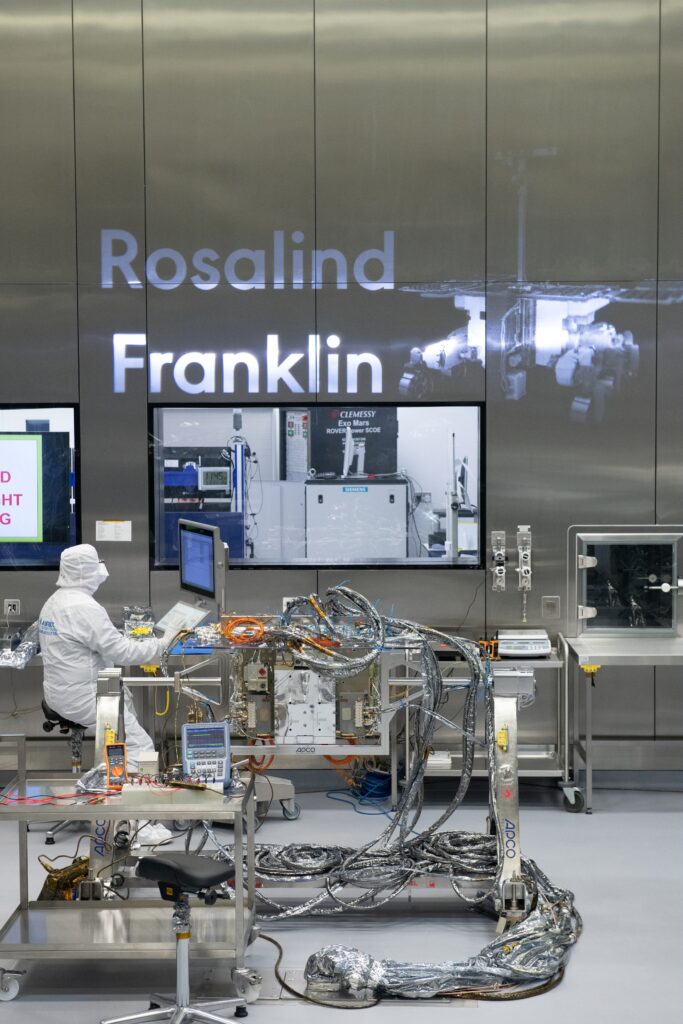
Training the next generation of scientists to reinforce Europe’s leadership in Mars exploration.

The EXODOCS consortium has designed a tailored Network-Wide Training (NWT) programme to prepare a cohort of highly interdisciplinary researchers. Its goal is to provide the knowledge and hands-on expertise needed to contribute directly to planetary mission operations, while also equipping the doctoral candidates (DCs) with transferable skills essential for thriving in both academic and non-academic careers. The NWT is structured into four main clusters, each focused on a distinct and cutting-edge area of space exploration and research, ensuring comprehensive scientific training alongside professional and personal development. 

Cluster NWT1: Mars Exploration

The Mars Exploration cluster delivers a comprehensive understanding of Mars missions, covering past successes, current programmes, and plans. These training activities highlight both the scientific and technical aspects of Mars exploration and emphasize the impact these missions have on shaping astrobiological exploration beyond Mars.
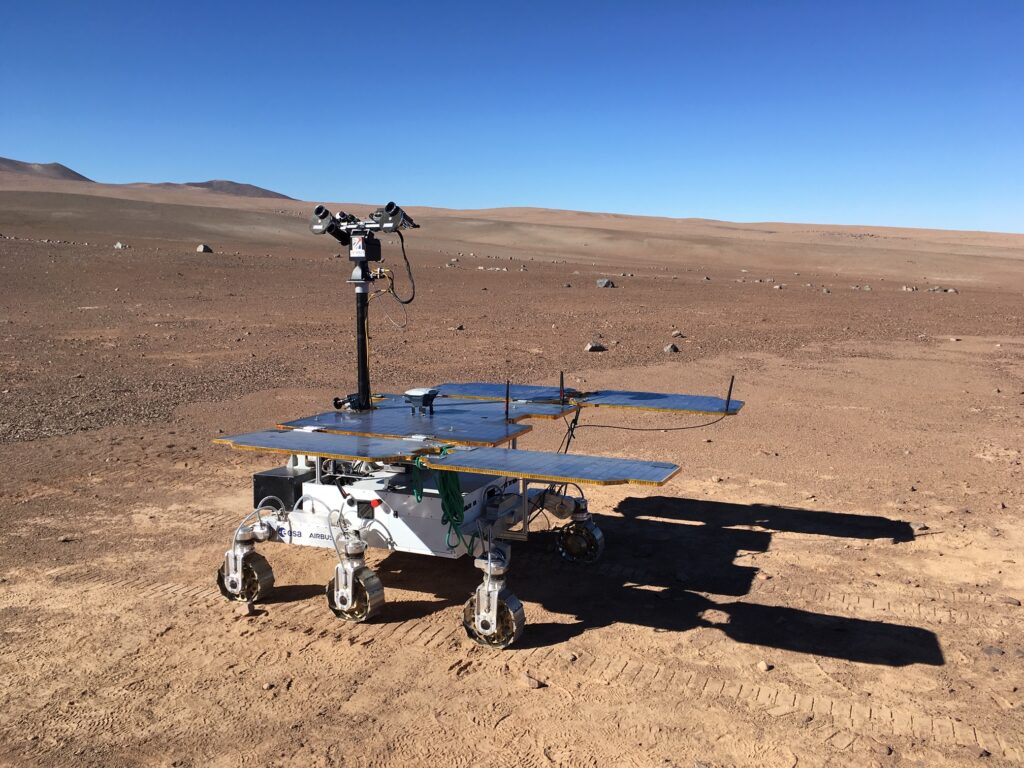
Image credit: Airbus

List of training activities:

History of Mars Exploration [NWT1a] Introduces DCs to the major milestones in Mars exploration. It covers orbital, lander and rover missions, highlighting key discoveries, technological advancements, data product (and their accessibility) and scientific objectives that have evolved over time.

Rosalind Franklin introduction school [NWT1b] Covers the history, mission objectives, and operational structure of the ERF mission. The main analytical instruments are presented, and their scientific purpose and analytical capabilities are detailed.

The Future of Mars exploration and beyond [NWT1c] Explores emerging technologies, mission concepts, and the scientific questions that will drive future astrobiology missions to Mars and other planets (including crewed missions).

Support Science from Earth [NWT1d] Presents groundbreaking research projects that have shaped our understanding of Mars. Highlights key findings from Earth-based studies and their role in shaping the design and goals of Mars exploration missions. Synergy

Cluster NWT2: Mission Science

Image credit: ESA/Stéphane Corvaja

The Mission Science cluster equips DCs with an in-depth understanding of the critical scientific aspects of Mars exploration, focusing on Martian mineralogy, geology, and astrobiology. DCs will develop advanced skills in analyzing and interpreting mission data, particularly in areas such as biosignature detection and mineralogical composition. Additionally, hands-on data analysis training ensures that DCs can handle large, complex datasets generated by Mars missions..

List of training activities:

Mineralogy and Geology School [NWT2a] Provides detailed insights into the mineralogy and geology of Mars, derived from previous mission data and laboratory experiments.

Astrobiology School [NWT2b] Equips DCs with the knowledge and methods necessary to identify biosignatures and understand their significance in the broader context of life detection on Mars.

Data Analysis School [NWT2c] Hands-on training in advanced data analysis techniques, tailored to the specific datasets generated by Mars missions. DCs will learn to handle large datasets and use analytical tools for processing and cross-interpreting scientific data from Mars.

List of training activities:
  • Rover mission Operations [NWT3a] The activity uses a real Rover, situated in a Mars Simulation facility (OU) while the operations team (DCs) control the Rover either remotely or on-site. As well as learning about concepts such as remote sensing interpretation, tactical and strategic awareness and data product types, the DCs will acquire key skills including team-work, communication and leadership.
  • Mission Simulations [NWT3b] DCs will participate in annual ExoMars Mission Simulations organized by Altec to recreate key mission phases, allowing participants to experience the complexities of rover navigation, scientific data collection, and decision-making processes in real-time.
  • Field Trip [NWT3c] Researchers will attend a field trip to the area of Magadi Lake (Nairobi), an analog of early Earth, simulating a cooperative science mission with portable emulators of ExoMars Rosalind Franklin instruments. This event is organized by J.M Garcia Ruiz through the “COSPAR Capacity Building Workshop/School on Mineral and Material Sciences in Space» in cooperation with the University of Nairobi.

Diversity and Public Engagement Training [NWT2d] Training on gender and diversity issues, social innovation, and the scientist’s role in achieving the UN’s SDGs. DCs will learn how to communicate their research, enhancing public engagement and addressing social issues through science.

List of training activities:
  • Management, Enterprise, and Entrepreneurial Skills [NWT4a] Overview of key project management skills, including risk management, financial control, and scientific project oversight.
  • European space network [NWT4b] Overview of key European industries and public institutions at the forefront of planetary research. Identifies strengths and weaknesses of the European planetary science landscape. DCs will explore opportunities for collaboration and funding.
  • Talent transfer [NWT4c] Connects DCs with key European, private stakeholders in space research. From established industries to emerging startups, the workshop seeks to enhance DCs’ understanding of industry trends, hiring needs, and the types of interdisciplinary skills required.
  • Participation to the Mars International Conference [NWT4d] The largest and most prestigious Mars conference in the world, offers DCs an unparalleled opportunity to present their research results to global experts. Held every five years and scheduled for July 2029, the conference will foster collaboration and offer feedback from leading figures in Mars science.
  • Participation to Europlanet Science Congress (EPSC) [NWT4e] The largest planetary science conference in Europe, EPSC provides an ideal platform for DCs to present their work, network with peers, and explore interdisciplinary research. DCs will be invited to join the Early Career Support Working Group, which supports skill-building and career development for young scientists.

Cluster NWT3: Mission Operation

The Mission Operation cluster addresses the practical aspects of mission operations, including participation in mission simulations and field trips to terrestrial analogue sites. These experiences are designed to equip DCs with hands-on knowledge of mission execution and collaboration.
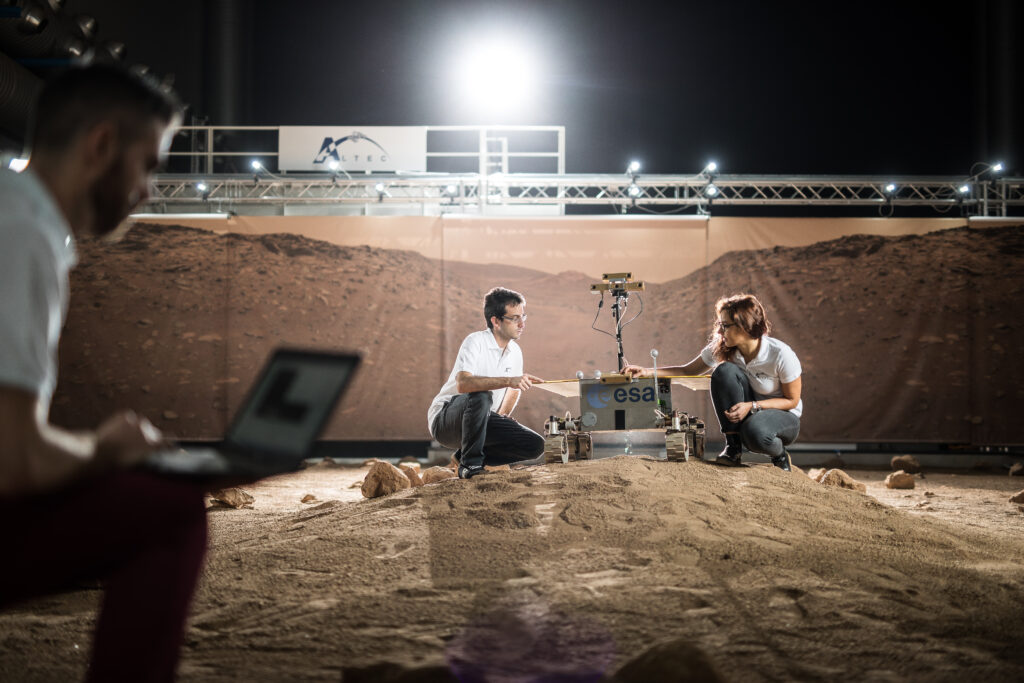
Image credit: ESA

List of training activities:

Rover mission Operations [NWT3a] The activity uses a real Rover, situated in a Mars Simulation facility (OU) while the operations team (DCs) control the Rover either remotely or on-site. As well as learning about concepts such as remote sensing interpretation, tactical and strategic awareness and data product types, the DCs will acquire key skills including team-work, communication and leadership.

Mission Simulations [NWT3b] DCs will participate in annual ExoMars Mission Simulations organized by Altec to recreate key mission phases, allowing participants to experience the complexities of rover navigation, scientific data collection, and decision-making processes in real-time.

Field Trip [NWT3c] Researchers will attend a field trip to the area of Magadi Lake (Nairobi), an analog of early Earth, simulating a cooperative science mission with portable emulators of ExoMars Rosalind Franklin instruments. This event is organized by J.M Garcia Ruiz through the “COSPAR Capacity Building Workshop/School on Mineral and Material Sciences in Space» in cooperation with the University of Nairobi.

Cluster NWT4: Transferable and complementary skills
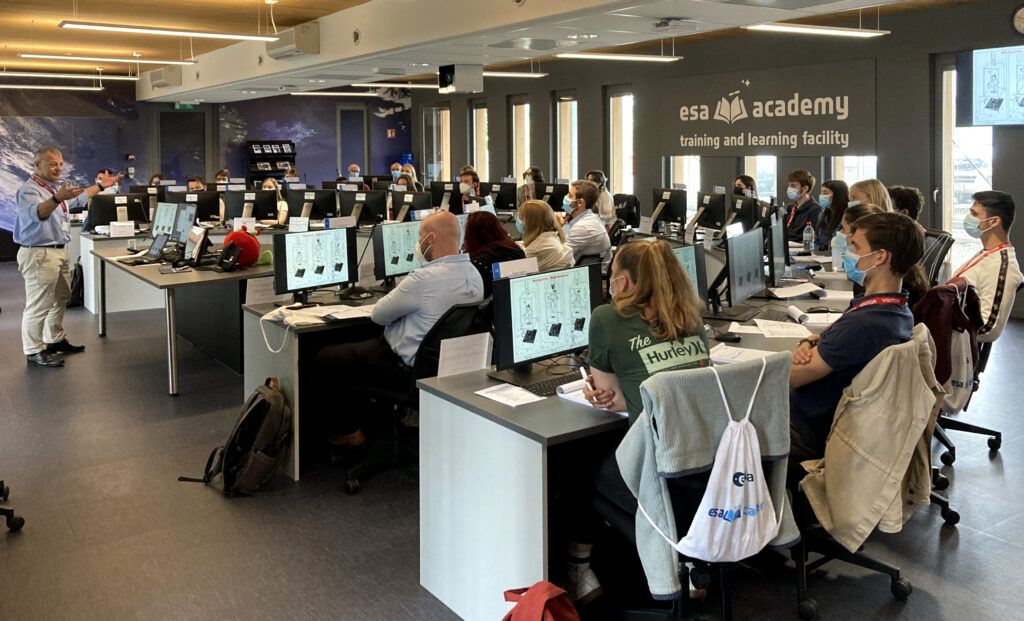
Image credit: ESA

The Transferable and complementary skills cluster is designed to ensure that DCs also acquire critical skills for career development. This cluster focuses on project management, entrepreneurship, and the transfer of knowledge from academia to industry. By interacting with key players in the European space industry, DCs will establish essential networks, ensuring they are well-positioned to pursue careers both within and beyond academia.

List of training activities:

Management, Enterprise, and Entrepreneurial Skills [NWT4a] Overview of key project management skills, including risk management, financial control, and scientific project oversight.

European space network [NWT4b] Overview of key European industries and public institutions at the forefront of planetary research. Identifies strengths and weaknesses of the European planetary science landscape. DCs will explore opportunities for collaboration and funding.

Talent transfer [NWT4c] Connects DCs with key European, private stakeholders in space research. From established industries to emerging startups, the workshop seeks to enhance DCs’ understanding of industry trends, hiring needs, and the types of interdisciplinary skills required.

Participation to the Mars International Conference [NWT4d] The largest and most prestigious Mars conference in the world, offers DCs an unparalleled opportunity to present their research results to global experts. Held every five years and scheduled for July 2029, the conference will foster collaboration and offer feedback from leading figures in Mars science.

Participation to Europlanet Science Congress (EPSC) [NWT4e] The largest planetary science conference in Europe, EPSC provides an ideal platform for DCs to present their work, network with peers, and explore interdisciplinary research. DCs will be invited to join the Early Career Support Working Group, which supports skill-building and career development for young scientists.